
Automated forex trading system risks explained means the concrete dangers of running MT4/MT5 Expert Advisors: fragile grid or martingale logic, overfitted backtests, execution slippage and VPS latency, and prop-firm rule breaches. EAs remove emotion but not risk, and automated systems can lose money.
- Grid and martingale EAs manage risk and recovery very differently during market swings, per independent analysis.[1]
- Success depends on strategy robustness, risk management, and prop-firm rule adherence, not buying an EA and hoping.[7]
- Regulators caution that retail automated trading carries unique risks and urge independent verification of performance claims.[4]
- A robot is only as good as the strategy coded inside it.[2]
automated forex trading system risks explained: definition and decision context
Automated forex trading system risks are the concrete ways an Expert Advisor (EA) can lose money faster than a human would — through fragile logic, poor execution, and broken rules — even though it removes emotional decision-making. Automated forex trading uses computer programs, typically EAs on MT4 or MT5, to identify and execute trades from a predetermined rule set.[7] Two of the most discussed strategy families, martingale and grid, each carry distinct advantages and challenges, particularly in how they manage risk and recovery during market fluctuations.[1]
The research pack here is largely educational and independent commentary rather than audited performance data, so treat every figure as context, not a guarantee. If you are new to EAs, start with our Blog for setup and risk framing before committing capital. The rest of this guide separates supported risks from practical safeguards you can configure yourself.
Who should consider automated forex trading system risks explained?
Anyone running or evaluating an MT4/MT5 EA — retail traders and prop-firm challenge participants alike — should understand these risks before going live. The martingale-versus-grid debate matters because both approaches automate position management during market fluctuations, and both can compound losses if unconstrained.[1]
Automated systems appeal to traders who want consistency without watching charts, but that same hands-off design means a flawed rule set keeps trading against you. As one independent comparison puts it, a robot is only as good as the strategy coded inside it, and manual trading adapts to context a robot cannot read.[2] Prop-firm traders face an extra layer: automation is popular for scaling strategy consistency across accounts, but it must still respect firm rules.[7] Browse our Downloads only after you can articulate how a given EA controls drawdown.
Benefits and practical limitations
The core benefit is disciplined, rule-based execution; the core limitation is that controls and oversight must keep pace with the system's complexity. The UK's FCA, reviewing algorithmic trading firms, stresses that controls and key oversight functions — including compliance and risk management — must keep pace with the ever-increasing complexity and speed of financial markets and technological advancements.[3]
That FCA guidance targets institutional principal trading firms, not retail EA users, so read it as a principle rather than a rule that governs your account. Still, the lesson transfers: an EA without matching risk controls is a liability. Practical limitations retail traders face include slippage between backtest fills and live fills, VPS latency delaying orders, and overfitted parameters that looked perfect on historical data but fail forward. Pair any bot with the discipline in our Risk management guide and keep position sizing conservative.
forex EA risks and the reader decision
Forex EA risk is not just strategy risk — it is also model risk, and AI-driven bots add opacity that makes failures harder to anticipate. An AI forex trading bot uses techniques like machine learning and reinforcement learning to analyse market data and execute trades automatically, adapting to changing regimes rather than following fixed conditions.[4]
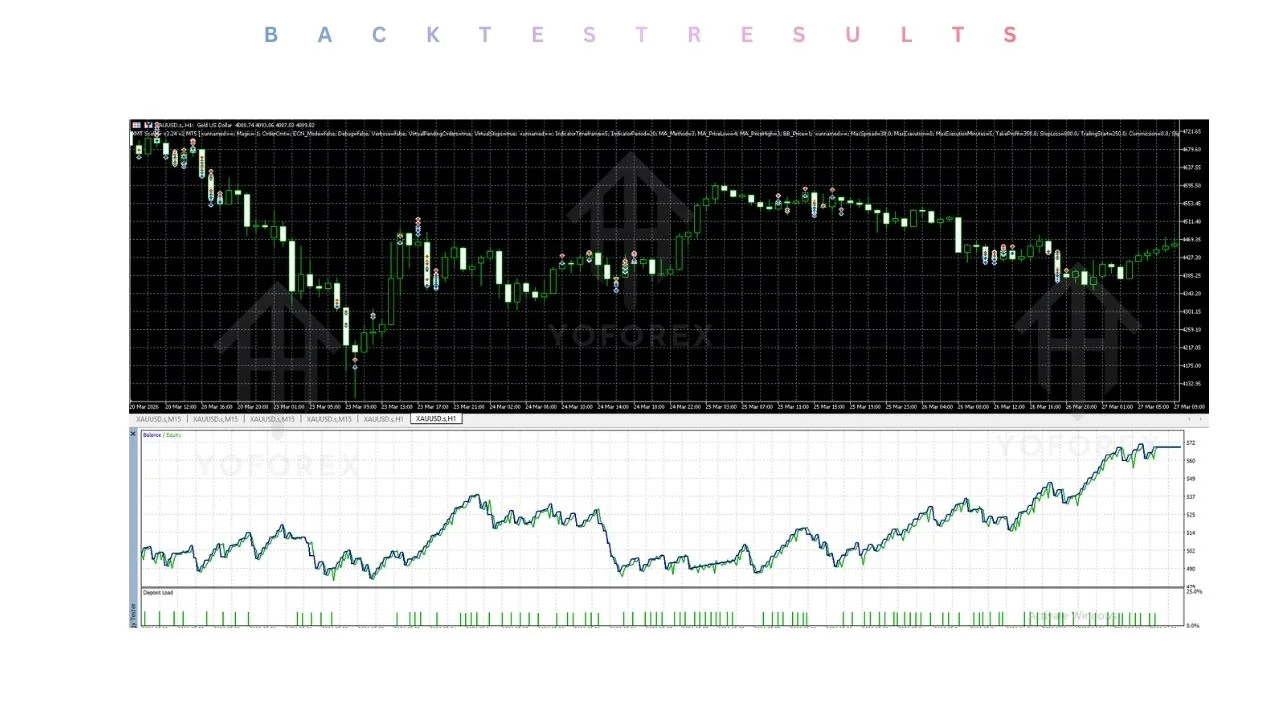
That adaptability cuts both ways: a model retrained on recent patterns can drift or overfit, and regulators including the CFTC and FINRA caution that retail automated trading systems carry unique risks, urging traders to verify performance claims with independent data.[4] Bot choice, one independent reviewer notes, depends on your risk tolerance, trading style, and platform, not on marketing headlines.[5] Before trusting XAUUSD or scalping automation, demand independently sourced numbers — vendor self-reported backtests are not verification.
MT4 automated trading dangers and the reader decision
The biggest MT4/MT5 danger is treating an EA as a shortcut to profit rather than a system requiring robust design and constant oversight. Independent prop-firm commentary is blunt: success depends on strategy robustness, proper risk management, and strict adherence to your prop firm's rules — not just buying an EA and hoping for profit.[7]
Concrete dangers include grid or martingale stacks that widen drawdown until a margin call, overfit parameters that decay live, and execution gaps from slippage or VPS latency. None of these show up in a clean backtest, which is why forward-testing on demo matters. The available evidence is independent editorial rather than audited trade data, so weigh it as guidance, not proof. If you rely on external calls, check how any provider documents results on our Signals page and reconcile them against your own demo runs before risking capital.
Evidence gap: Use the supplied angle: Explain the real risks of automated forex trading system
The clearest, best-supported takeaway is that responsible EA selection is a risk-tolerance decision, not a performance chase. As an independent 2026 review states, choosing the right trading bot depends on your risk tolerance, trading style, and preferred trading platform.[5]
Where the research pack is thin, we hedge rather than fill gaps: it offers no audited XAUUSD drawdown figures, no verified slippage benchmarks, and no independent prop-firm pass-rate data we can present as neutral fact. Treat any single-source statistic here as directional. The practical setup response is universal regardless of strategy: cap daily loss, cap per-trade risk, use a stable VPS, and forward-test. For gold-specific automation, our Gold EAs category groups tools by strategy so you can match volatility exposure to your own limits.
How should readers validate the available evidence?
Validate by cross-checking claims against independent data and by testing on a demo before live capital — never accept a vendor's own numbers as verification. The FCA notes that poor practices it outlines highlight areas where firms should carry out further work to achieve compliance with the requirements, a reminder that even sophisticated operators need ongoing scrutiny.[3]
For retail EA users, validation means: reproduce backtests with realistic spread, commission, and slippage assumptions; forward-test on demo; and confirm any performance claim against independent sources, as regulators advise.[4] Remember a robot only executes the strategy inside it, so a weak edge stays weak when automated.[2] This article is educational, review-only, and not publish-ready trading advice; verify everything independently before you deploy any EA live.
Sources
- Automated Forex Trading: Martingale vs Grid Strategies Explained
- Forex Robot vs Manual Trading: Side-by-Side
- Multi-firm review of algorithmic trading controls: high-level observations | FCA
- Best AI Forex Trading Bots in 2026: 12 Top Automated Trading Systems Reviewed - Trasignal Blog
- How to Start Fully Automated Forex Trading 2026 | Best Forex EAs
- Automated Forex Trading: Pros, Cons & Best Practices 2026